

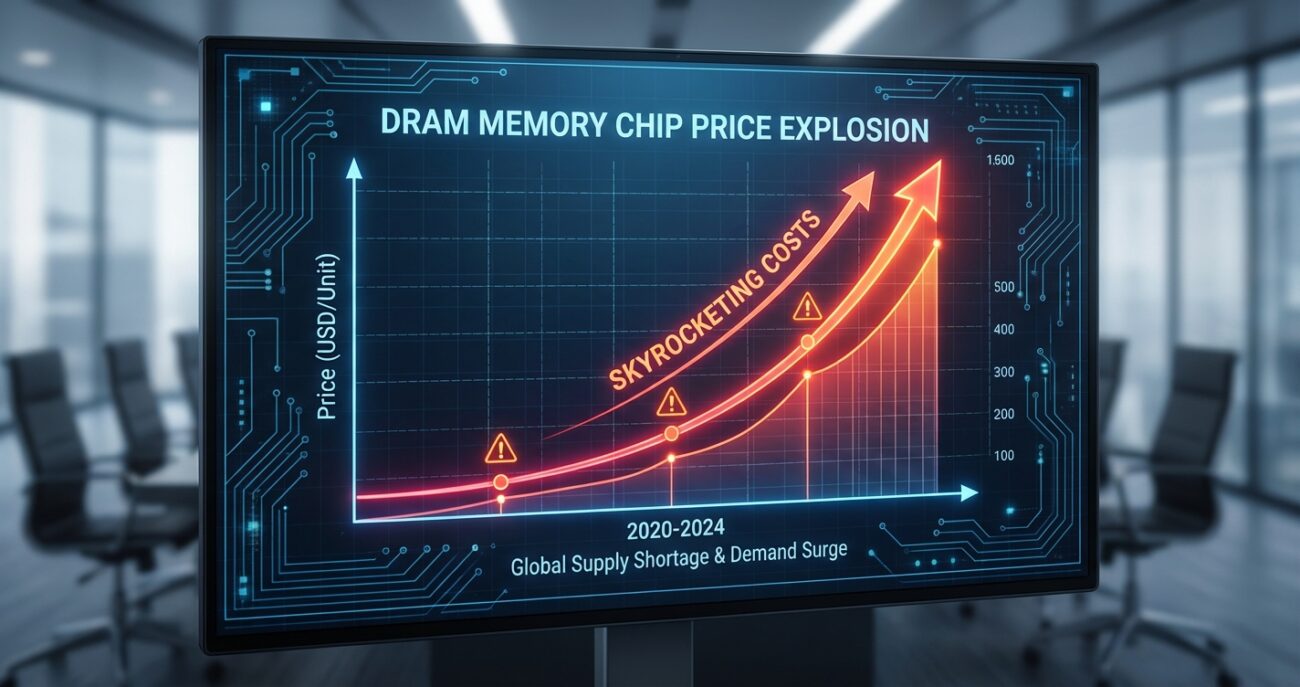
RAM Prices Skyrocket: Why Apple Mac Pro and Mac Mini Are Now the Best Value
The 5-Year RAM Price Journey: From Crash to Explosion
2020-2022: Pandemic-Driven Demand Surge
During the COVID-19 pandemic, work-from-home trends drove unprecedented demand for PCs and laptops. DRAM prices saw consistent upward trends as global semiconductor demand surged from 2020 through 2022.
2023: Historic Price Collapse
2023 recorded the most dramatic DRAM price decline in history. Contract prices dropped over 80% in just months, with DDR5 falling to around $4 and DDR4 to $2.5-3.5. Oversupply combined with inflation-driven demand weakness created what analysts called a “perfect storm” for memory markets.
2024-2025: Unprecedented Price Explosion
| Period | DDR4 | DDR5 |
|---|---|---|
| Since early 2025 | +250% | +300% |
| Some components | – | Over 4x increase |
Since September 2025, DDR5 RAM prices have surged more than 4x, with some components rising nearly 10x within a year. Overall, DRAM prices have increased by approximately 170%.
The 3 Key Drivers Behind RAM Price Explosion
1. AI Boom Creating Datacenter Demand Surge
The global AI infrastructure buildout, centered around NVIDIA, has created explosive demand for low-power DRAM in AI datacenters. As of 2025, AI memory is essentially “sold out” due to overwhelming demand.
2. HBM Production Focus Cannibalizing Standard DRAM Supply
Major memory manufacturers like Samsung and SK Hynix are focusing production capacity on HBM (High Bandwidth Memory), which is essential for AI servers and far more profitable. This has led manufacturers to convert consumer DDR5 production lines to HBM, drastically reducing consumer DRAM supply.
3. Supply Chain Disruptions and Reduced Production
Memory manufacturers have cut production capacity over recent years. Combined with surging PC replacement demand in 2025, supply cannot keep up with demand.
2026 Outlook: Prices May Rise Further
- DRAM Average Selling Price (ASP): Projected additional 53-88% increase (Citigroup)
- Server DRAM: Up to 144% increase expected
- DRAM supply shortage expected to persist through 2026
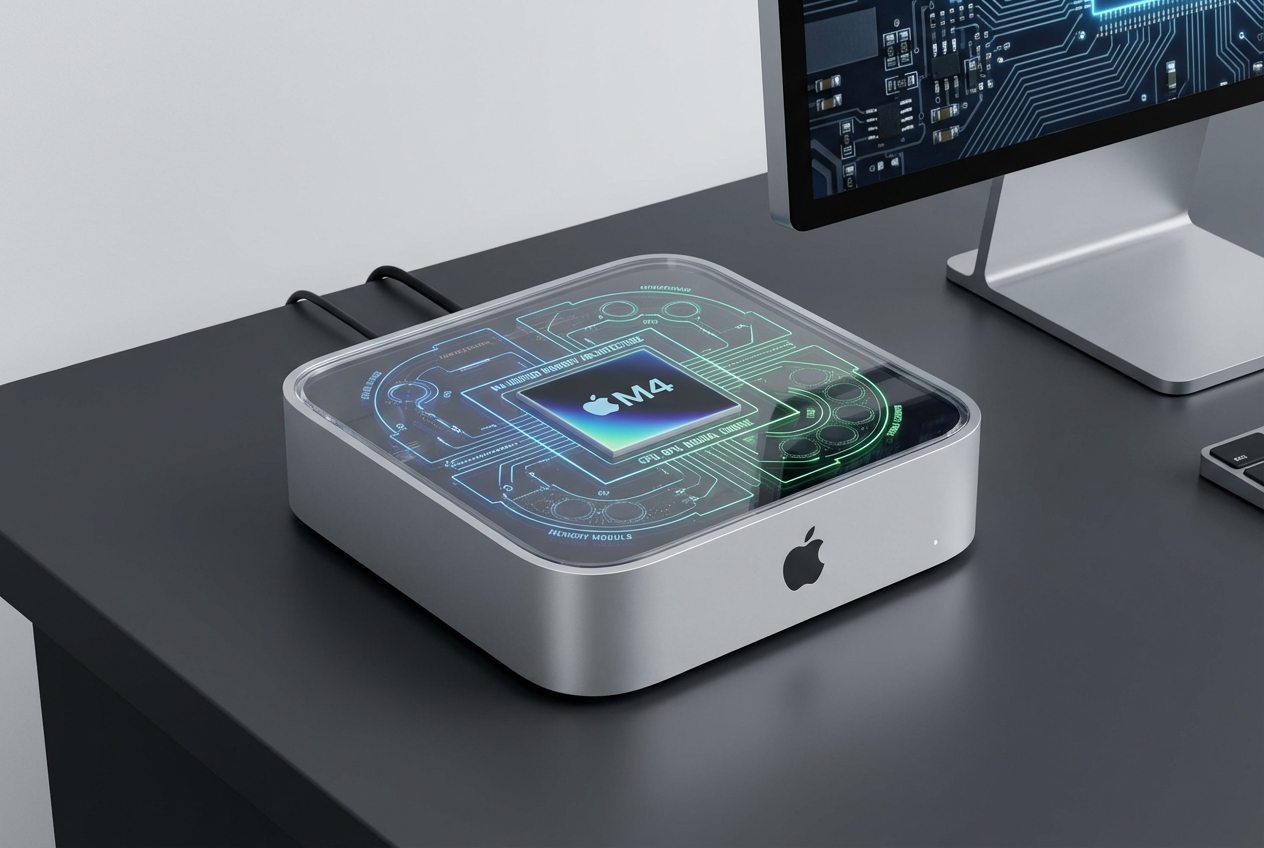
Why Apple Mac Pro and Mac Mini Are Now Excellent Value
The Power of Unified Memory
Apple Silicon (M-series chips) features CPU, GPU, and Neural Engine sharing Unified Memory. This architecture provides several advantages:
- Lower Latency: Memory access is significantly faster
- High Bandwidth: Up to 800GB/s memory bandwidth
- Power Efficiency: Lower power consumption than discrete memory systems
Price Comparison: Apple Unified Memory vs. Standard DDR5 RAM
| Configuration | Standard PC (DDR5 RAM) | Apple Mac mini M4 Pro |
|---|---|---|
| 32GB Memory | ~$300-400 (upgrade) | 24-48GB unified memory |
| 64GB Memory | ~$600-800+ | 48-64GB unified memory |
| Memory Upgrade | Possible | Only at purchase |
The key insight: While adding DDR5 RAM to a standard PC has become prohibitively expensive, Apple has maintained relatively reasonable pricing for unified memory upgrades.
Mac mini M4/M4 Pro Value Analysis
Mac mini M4 (Base Model)
- Price: Starting from $599 (16GB unified memory)
- Value: Higher performance than similarly-priced standard PCs
- Recommended for: General office work, web browsing, light creative work
Mac mini M4 Pro
- Price: Starting from $1,399 (24GB unified memory)
- Value: More affordable than standard PCs with 24-48GB RAM
- Recommended for: Video editing, 3D rendering, machine learning, development work
Conclusion: Making the Smart Choice in the Age of RAM Price Inflation
With RAM prices at historic highs, Apple’s Unified Memory architecture has become an option that cannot be ignored.
When to Choose Mac mini
- Creative work requiring high RAM capacity (32GB+)
- Power efficiency and quiet operation are priorities
- Developers leveraging the macOS ecosystem
- Lower power consumption and heat output than standard PCs
Considerations
- Unified Memory is not upgradable after purchase
- Limited compatibility with some games and Windows-only software
If you’re considering a PC upgrade during this RAM price surge, the Apple Mac mini or Mac Pro deserves serious consideration. The efficiency of unified memory combined with relatively affordable upgrade costs makes it a very attractive option in today’s market conditions.
